Gross Salary vs Monthly Salary: What's the Real Difference?
Confused about gross salary vs monthly salary? This breaks down tax, NI, pension, and student loan deductions so you know what you'll actually take home.
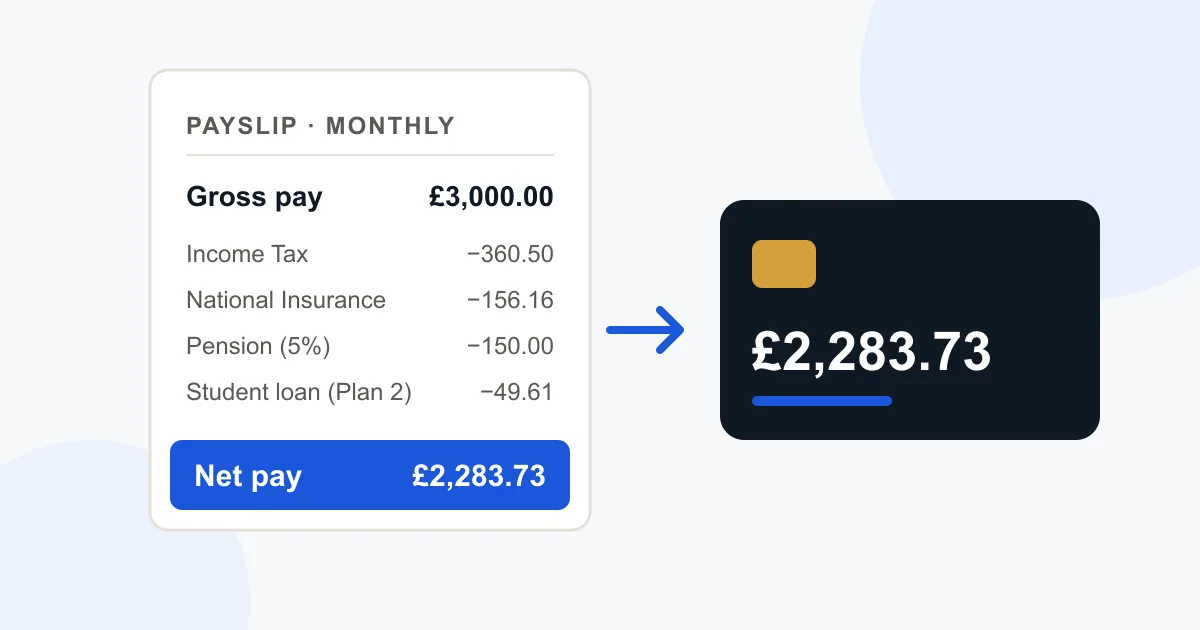
Gross pay is the headline number. Monthly take-home pay is what's left. Tax, National Insurance, pension contributions, and student loan repayments all take their share first. Neither number is wrong. They just answer different questions. Once you see how one turns into the other, your payslip stops feeling like a mystery.
You sign a contract for £35,000 a year. Your first payslip lands. The number is nowhere near £2,916 a month. That gap is the whole story here. It's the gap between gross salary and monthly salary. It trips up almost everyone at some point.
What Does Gross Salary Actually Mean?
Gross salary is what your employer agrees to pay you. It's the figure before anything gets taken off. It's the number in your contract. It's the number in the job advert. It's the number you'd say out loud if someone asked what you earn. It's also the number that sends people to a gross annual salary calculator. They want to know what it really means in their pocket. £35,000 on paper and £35,000 in your account are two very different things.
Where That Number Comes From
This figure is set for the year. That's true even if you're paid weekly or monthly. Bonuses, overtime, and commission sit on top of your base gross salary. That's part of why two people on the "same" salary can end up with different totals once everything's added in. Your payslip lists gross pay first. Then it works down through every deduction. The last line is the number that lands in your bank.
What Happens Between Gross Pay and Monthly Take-Home Pay
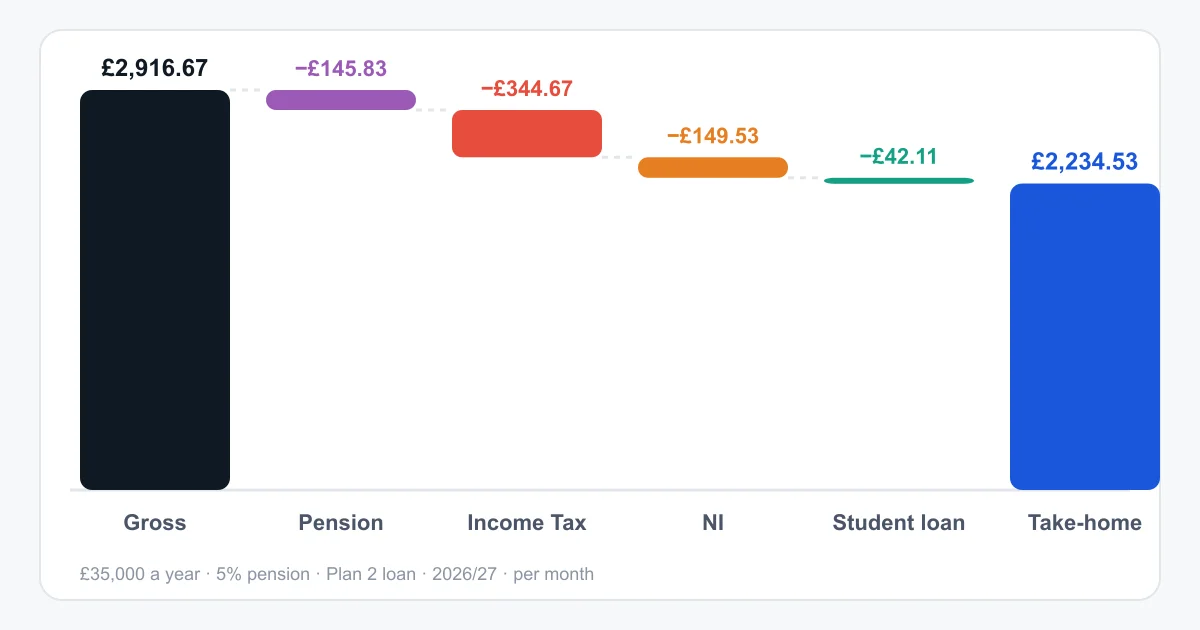
Between gross pay and take-home pay sits a fairly fixed order of deductions. Pension contributions usually come off first if your scheme deducts before tax. Then income tax. Then National Insurance. Then your student loan repayment, if you have one. What's left after all four steps is your net pay for that month.

Run that same gross figure through a gross pay salary calculator. You'll watch each deduction get peeled away one at a time. No need to hold four sums in your head. This also explains why a £5,000 pay rise rarely feels like an extra £5,000 in your pocket. Tax and National Insurance both take a slice of it too.
Want the breakdown explained line by line, not just in numbers? MoneyHelper's guide to understanding your payslip walks through what each deduction is for. It also explains why it shows up where it does.
Converting Your Annual Number Into a Monthly One
Job adverts almost always quote a yearly figure. But rent, bills, and savings are monthly problems. So the next question is simple: what does this mean per month?
Type your yearly number into an annual salary take-home calculator. The conversion happens straight away. No manual division needed. Phrase the search a little differently, and you'll land on an annual salary to take home calculator instead. Same question. One extra word. The same answer underneath. This salary calculator handles either version. You don't need to pick the "right" wording first.
Here's the part that catches people out. Dividing your annual salary by twelve doesn't give you an accurate monthly tax figure. It feels like it should, but it doesn't. Your personal allowance, the basic rate band, and the National Insurance thresholds are all set for the year. But they're applied per pay period. A real monthly calculation accounts for that. A flat division by twelve doesn't. The gap shows up most for anyone with a bonus month, a mid-year pay rise, or pay that changes month to month.
Why Your Monthly Take-Home Can Move Even When Your Gross Pay Doesn't
Plenty of people earn the same gross salary all year. Yet their take-home pay still shifts from one payslip to the next. It's rarely a mistake. It's usually one of a handful of predictable causes.
Tax Code, Pension, and Student Loan Changes
A tax code change partway through the year can shift your tax-free pay. A pension contribution that goes up by even half a percent makes a difference too. It lowers your taxable pay. If your scheme uses salary sacrifice, it lowers your National Insurance bill as well, since the contribution comes off before NI is worked out. Student loan repayments only start once your pay crosses a monthly threshold. So a bonus month can trigger a repayment that a normal month wouldn't.
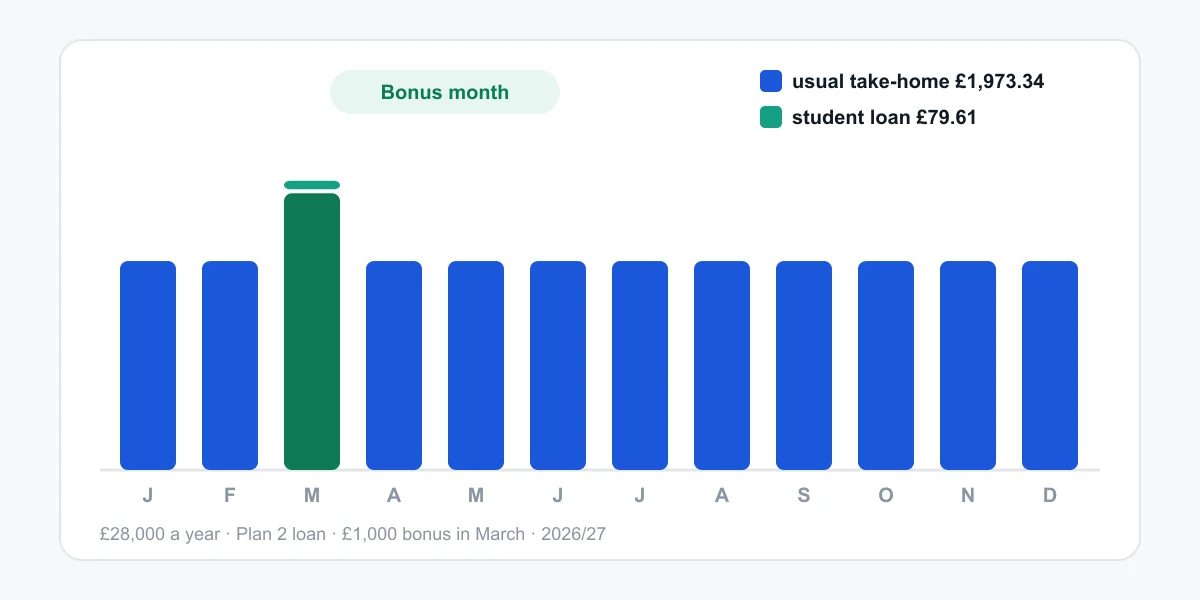
A take-home pay salary calculator earns its keep here. It recalculates the full picture the moment any of those things change. It doesn't assume January's numbers still apply in June.
If your hours move around from week to week, check that monthly figure as an hourly rate first. Do this before you agree to extra shifts or a part-time switch. A small monthly change can be a bigger hourly one than it first looks.
A Worked Example: £35,000 Gross, Paid Monthly
Numbers are easier to trust than explanations. Here's one using 2026/27 rates. No pension and no student loan, just to keep it clean.
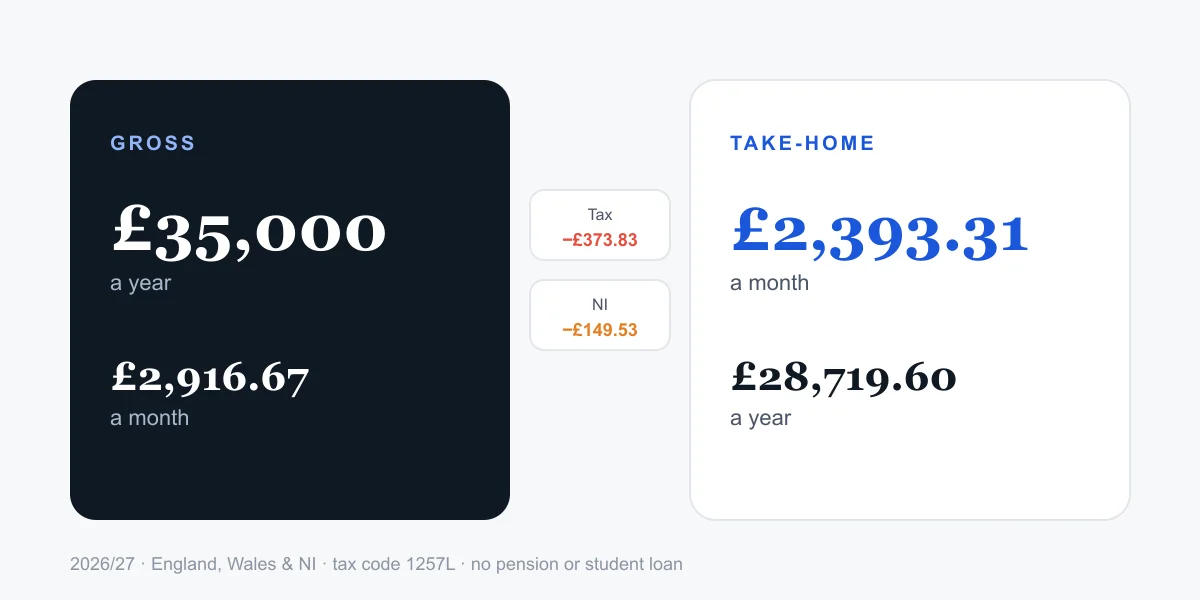
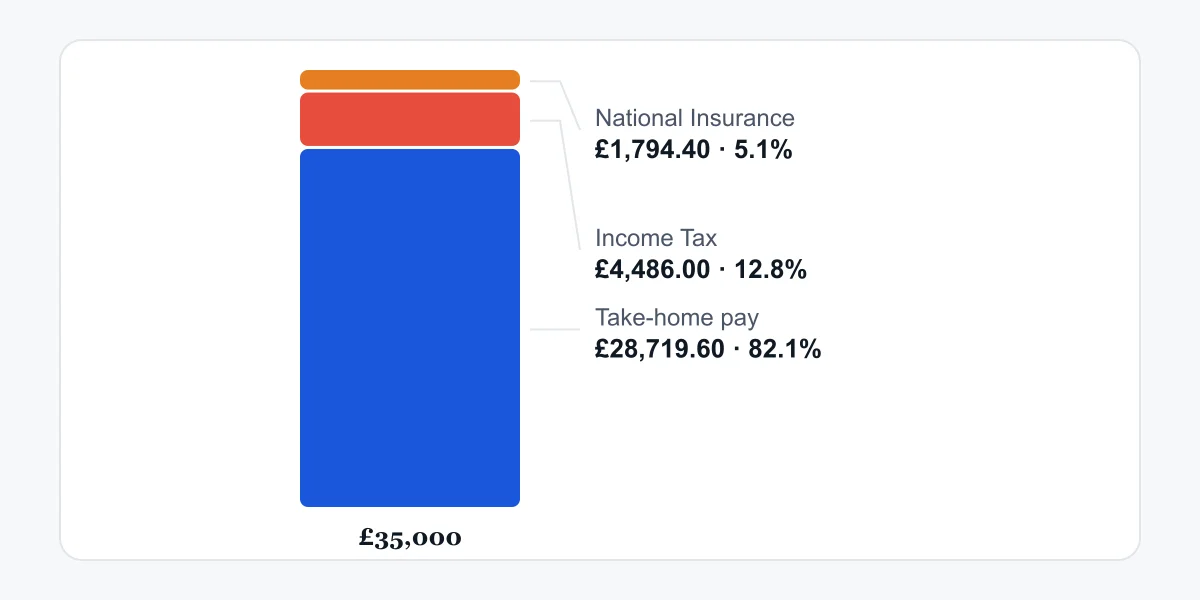
£35,000 a year works out to £2,916.67 gross per month. The monthly personal allowance is £1,047.50. That leaves £1,869.17 of that as taxable pay. Tax at the basic rate of 20% comes to £373.83. National Insurance is charged at 8% on pay above the £12,570 yearly threshold. That comes to £149.53 a month. Add those two together and the total deductions land at £523.36.
Subtract that from the gross figure. Take-home pay for the month comes to £2,393.31. That's just over £28,719 across the full year. Add a pension contribution or a student loan repayment to that same £35,000, and both numbers move again. That's exactly what a salary-to-net-pay calculator is built to handle. You don't redo the maths by hand every time something changes.
It's worth remembering one thing. Crossing into a higher tax band only affects the slice of income above that threshold. It doesn't touch your whole salary. The same staged logic applies to National Insurance. So a pay rise that nudges you over a band rarely costs as much as people fear.
Conclusion
Gross salary and monthly take-home pay will always be two different numbers. That's by design, not by accident. One tells you what you've agreed to earn. The other tells you what you can actually spend. The gap between them is made up of tax, National Insurance, pension contributions, and student loan repayments. Each one is applied in a fairly predictable order.
Once you know that order, your payslip stops feeling like guesswork. A pay rise, a new pension percentage, or a change in tax code will always move your take-home pay. You can work out that amount in advance. You won't just discover it after the fact.
Frequently Asked Questions
Is gross salary the same as monthly salary?
No. Gross salary is your full yearly pay before any deductions. Monthly salary, or monthly take-home pay, is what's left after tax, National Insurance, pension, and student loan repayments have been taken off for that month.
Why is my monthly take-home pay less than my gross salary divided by twelve?
Tax and National Insurance are worked out per pay period. They use annual thresholds, not a flat twelfth of your yearly bill. Bonus months, pension percentages, and tax code changes can shift the figure, too.
Does a pension contribution reduce my gross salary or my take-home pay?
It reduces your take-home pay, not your gross salary. Most pension contributions come off your pay before income tax is worked out, which shrinks your tax bill slightly. Salary sacrifice schemes also come off before National Insurance, so they shrink that deduction too.
How much of my gross salary actually disappears in deductions?
It depends on your income, tax code, pension rate, and whether you have a student loan. As a rough guide, someone on £35,000 with no pension or student loan keeps around 82% of their gross pay as take-home pay under current rates.
Does a bonus get taxed differently from my normal monthly salary?
Not different in rate, but it can look that way. A bonus added to your pay in one month can push that month into a higher tax band for a while. Your annual salary hasn't actually changed.
Will my gross salary or my take-home pay show up on a mortgage application?
Lenders usually look at gross salary first to check affordability. Then they check your payslips or bank statements. That confirms what you actually take home each month. Both figures tell them something different about your finances.
Does Scotland use the same gross-to-net calculation as the rest of the UK?
The principle is the same. But Scotland sets its own income tax bands, with six rates from 19% to 48%. So the same gross salary can give a slightly different take-home figure north of the border.
Sources
About Harry Thompson
UK Tax Accountant
Harry Thompson is a UK tax professional with experience in accounting, taxation and financial reporting. He writes the Monthly Salary Calculator UK and its salary guides.
More about Harry Thompson