How to Negotiate Salary on a Job Offer: A UK Step-by-Step Guide
Research the going rate with ONS earnings data, set your number, counter with confidence and negotiate the whole package, with example wording you can adapt.
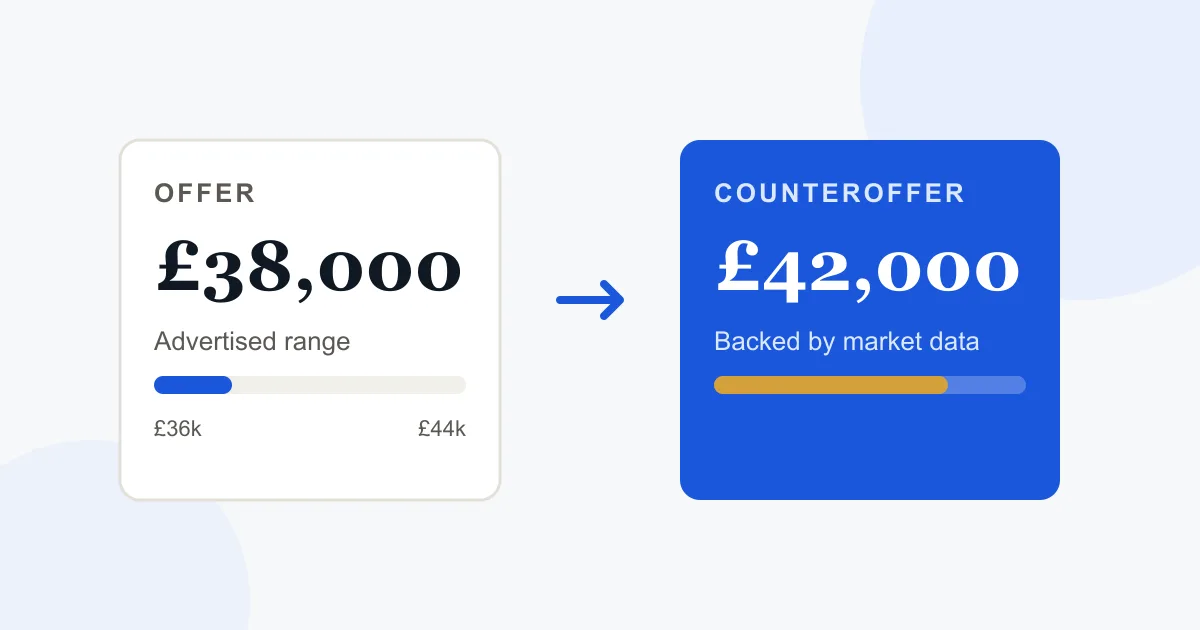
The best time to negotiate pay is after you receive a job offer and before you accept it. By then the employer has decided it wants you, and a higher starting salary carries through into every future pay rise and every pension contribution calculated as a percentage of it.
Negotiating does not require a hard sell. It requires a well-researched number, a clear and polite request, and a willingness to discuss the whole package. Here is how to do each.
Step 1: Find out what the job pays
Start with independent data rather than one person's anecdote.
Official earnings data
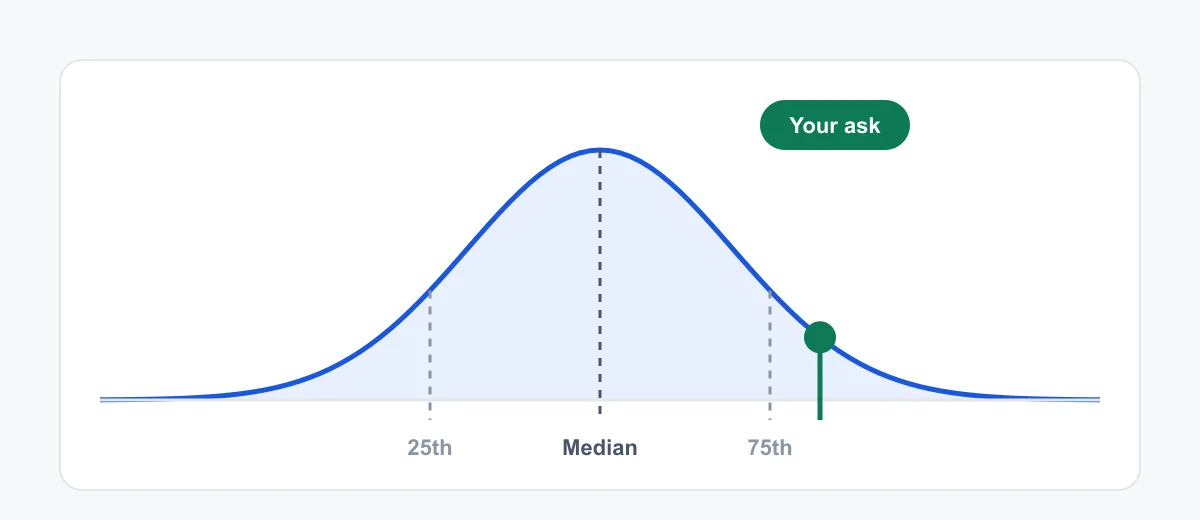
The Office for National Statistics publishes the Annual Survey of Hours and Earnings (ASHE), the most detailed official source of UK pay data. It breaks earnings down by occupation, region and industry, and shows percentiles as well as the median. Look up your occupation and region, and note the median and the 25th and 75th percentiles. Together they show the realistic range. If you have more experience than a typical new starter, aim for the upper part of it.
Advertised salaries
Many UK job adverts state a salary or a salary band. Compare bands for the same role at similar employers in your area. They are a strong guide to what this employer can pay, and an employer that advertised a band will usually expect some discussion within it.
Pay scales
In the public sector and in many large organisations, pay is set by published scales or bands. Negotiation then tends to be about which point on the scale you start at, rather than the scale itself.
People in the field
Recruiters, former colleagues, trade unions and professional bodies can tell you how pay works at particular employers, such as how big bonuses usually are, or whether the top of an advertised band is ever offered.
Step 2: Set three numbers before you talk
Decide these in advance, in private:
- Target: the salary you will ask for, backed by your research.
- Acceptable: a figure you would be happy to accept.
- Walk-away: the lowest offer you would take, given your current pay, living costs and other options.
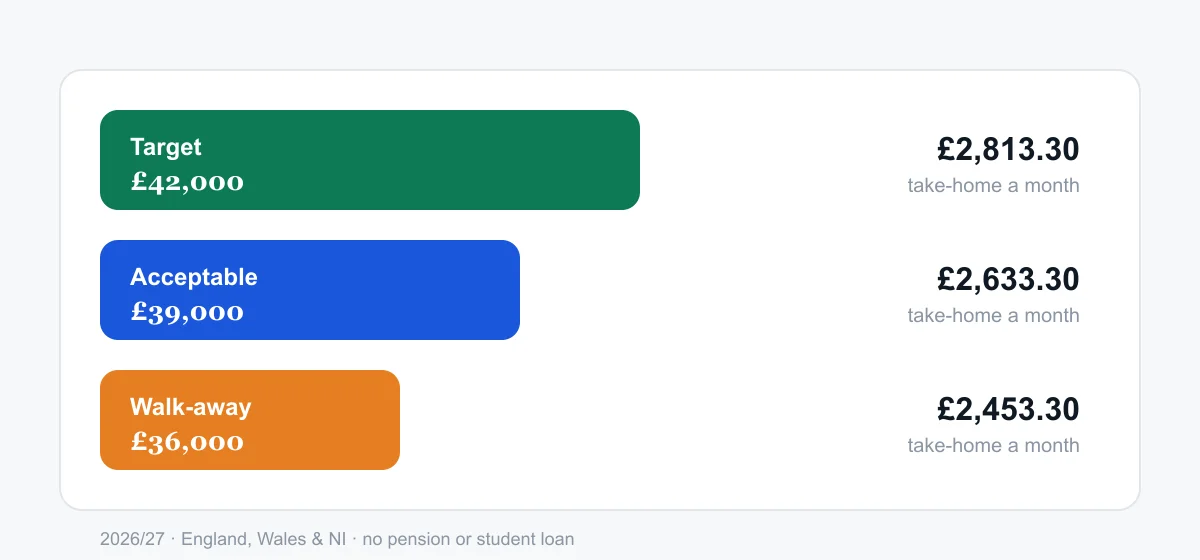
Turn each one into monthly take-home pay with our UK salary calculator. A £2,000 difference in salary is worth noticeably less than £167 a month once Income Tax, National Insurance, pension and any student loan have been taken off.
Step 3: Let the employer name a figure first, where you can
If you are asked about salary expectations early, you can turn the question around politely:
"I'd like to understand the role a bit more first. What salary range has been budgeted for this position?"
You do not have to tell a prospective employer what you earn now. You can talk about the salary you are looking for instead.
If you need to give a number, give a range whose bottom is at or above your acceptable figure.
Step 4: Respond to the offer with a specific counter
When the offer arrives, thank them, show you are keen, and ask for the details in writing so you can review them. Then reply with one specific figure and the reason for it:
"Thank you again for the offer. I'm really pleased and excited about the role. Based on the salary data I've seen for this position in the region, and the experience I bring with [specific skill or result], I'd like to ask for a starting salary of £42,000. If we can agree that, I'm ready to accept."
Why this works:
- A precise figure reads as researched. "Around forty" invites a lower counter.
- One reason is enough. A long list of justifications sounds less sure.
- Saying you are ready to accept gives the hiring manager something concrete to take to whoever signs off the budget.
Ask for a little more than the figure you would be satisfied with, because counteroffers often meet in the middle. Stay within the range your research supports so the request is credible.
Step 5: Negotiate the package, not just the salary
If the salary is fixed, other terms often are not:
- Pension contributions, especially if the employer will pay more than the minimum or offers salary sacrifice
- Annual leave above the statutory 28 days
- Hybrid or flexible working
- Start date, so you have a break between jobs
- Job title or grade, which affects future pay bands
- A salary review after six months, written into the offer
- Training budget or professional qualifications
- A signing bonus, if you are leaving a bonus behind
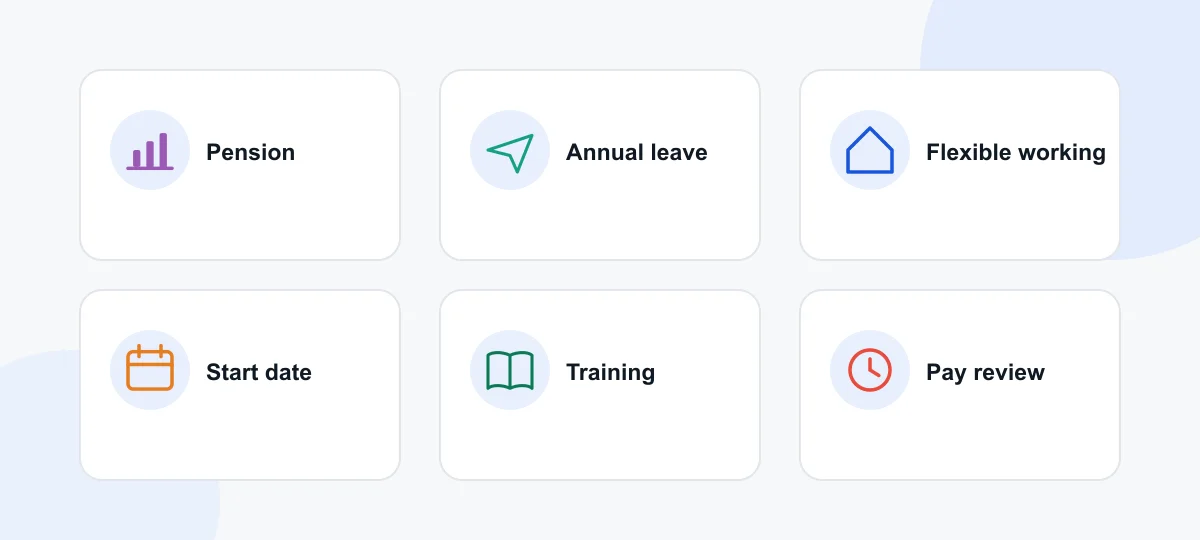
Raise these one at a time, after the salary conversation, rather than as one long list.
Step 6: Get the final terms in writing
Once you agree, ask for an updated offer letter showing the salary, pension contributions, holiday, start date and anything else you agreed. Your employer must give you a written statement of the main terms of your job, including pay and hours, on or before your first day. Do not hand in your notice at your current job until you have the new offer in writing, and check how much notice your current contract requires.
Common mistakes
- Accepting on the spot. Asking for a day or two to review an offer is normal.
- Negotiating on need, not value. Your rent is not the employer's concern. Your skills and the market rate are.
- Bluffing about other offers. If you mention a competing offer, it should be real.
- Forgetting the pension. A higher employer contribution can be worth more than a small salary increase.
- Reopening a settled deal. Once you have agreed and received the written offer, accept it gracefully.
When the number will not move
Some roles have fixed pay, such as posts on national pay scales or under collective agreements. Even then, it is worth asking how starting points are decided, because relevant experience can sometimes place you higher up the scale from day one.
Sources
About Harry Thompson
UK Tax Accountant
Harry Thompson is a UK tax professional with experience in accounting, taxation and financial reporting. He writes the Monthly Salary Calculator UK and its salary guides.
More about Harry Thompson