How to Calculate Your Monthly Salary From Annual or Hourly Pay
Convert a UK annual salary or hourly rate into monthly pay, compare weekly, fortnightly and four-weekly paydays, and avoid the four-weeks mistake.

Your monthly salary is your annual salary divided by 12. A £30,000 salary works out at £2,500 a month before deductions. If you are paid by the hour, multiply your hourly rate by the hours you work each week, then by 52 weeks, and divide by 12.
That is the whole calculation, but it catches people out in two places: hourly workers who multiply by four weeks instead of 52 ÷ 12, and anyone paid every four weeks who expects twelve paydays a year. This guide covers both, with worked examples.
Annual salary to monthly salary
Divide the annual figure by 12:
Monthly salary = annual salary ÷ 12
| Annual salary | Monthly (gross) |
|---|---|
| £25,000 | £2,083.33 |
| £30,000 | £2,500.00 |
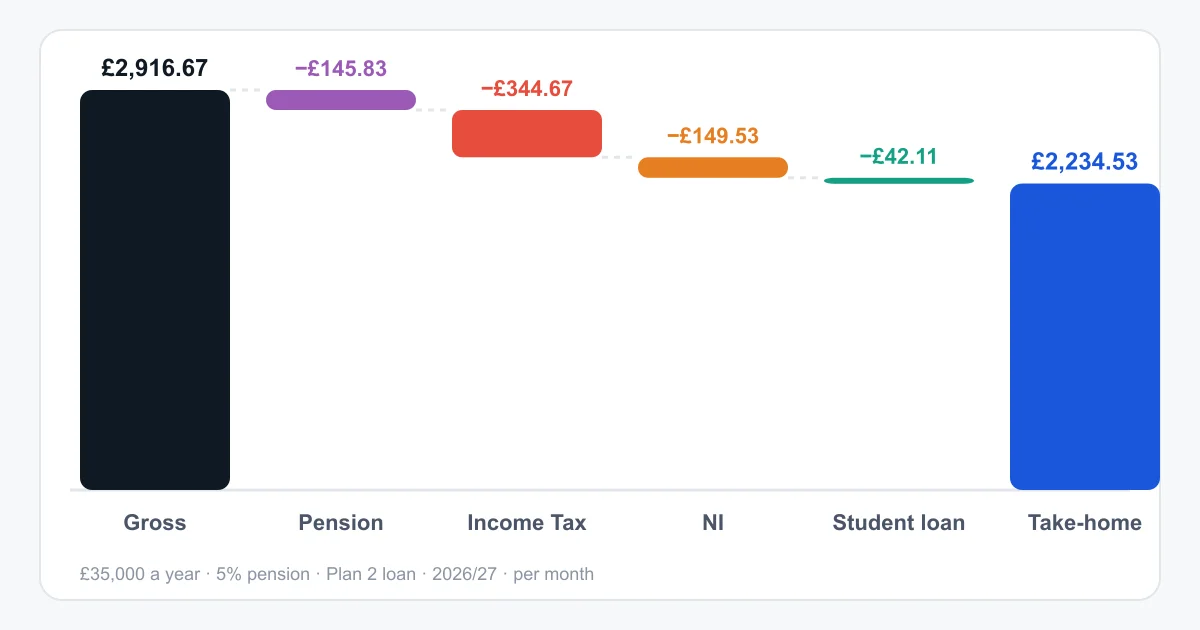
| £35,000 | £2,916.67 |
| £45,000 | £3,750.00 |
| £60,000 | £5,000.00 |
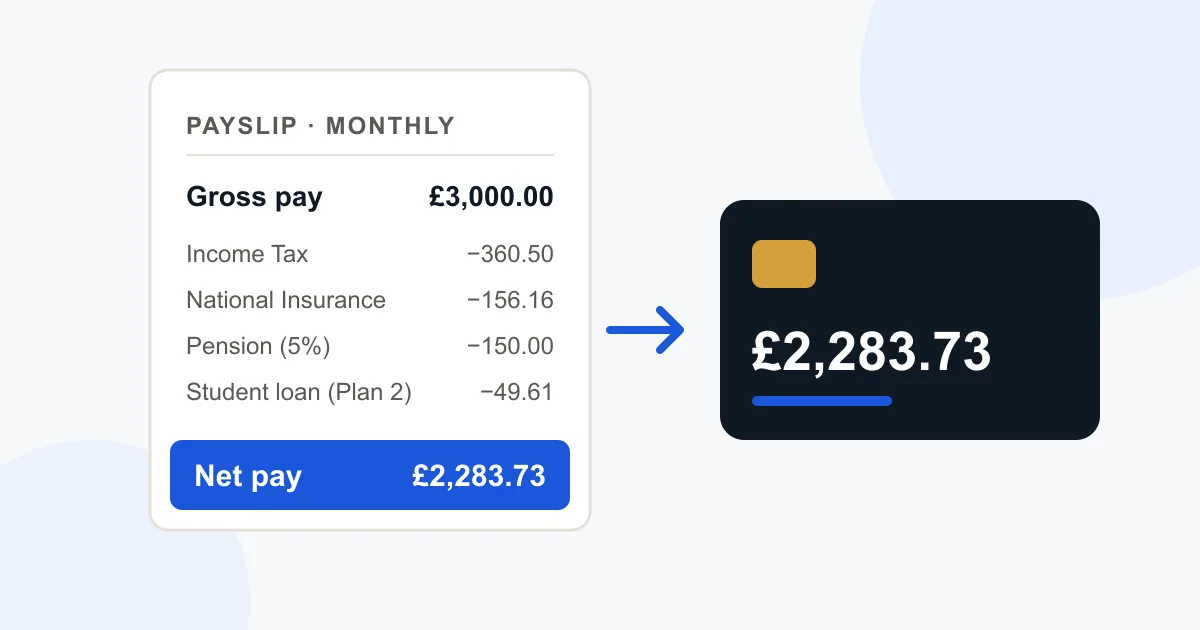
These are gross figures, meaning the amount before Income Tax, National Insurance, pension and any student loan. What reaches your bank account is lower. Our guide to gross vs. net pay explains each deduction, and the UK salary calculator works out your exact take-home pay.
Hourly rate to monthly salary
For an hourly job with steady hours:
Monthly pay = hourly rate × hours per week × 52 ÷ 12
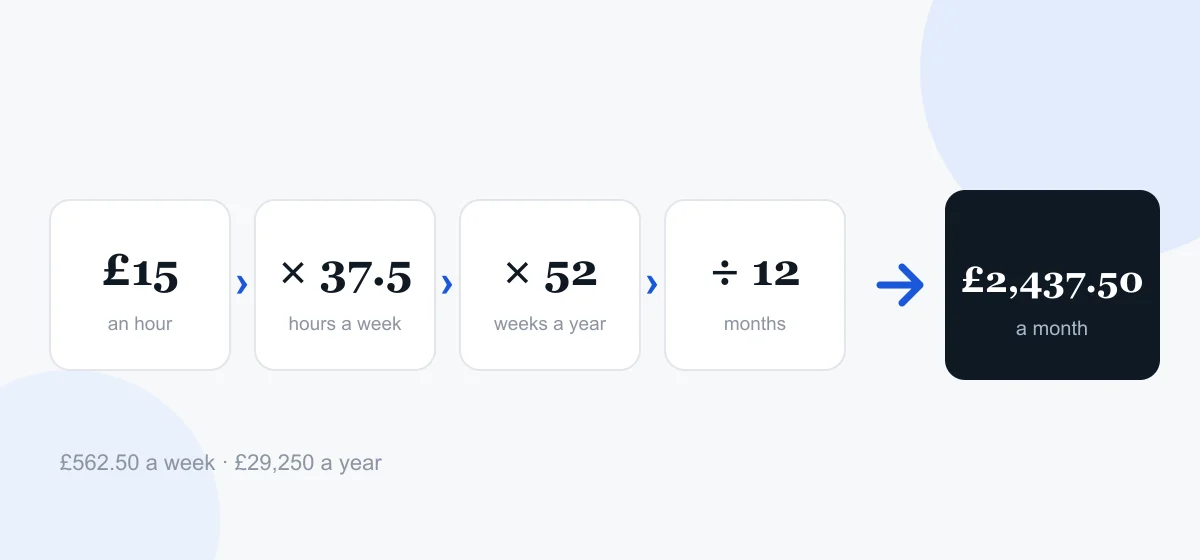
Someone earning £15 an hour for 37.5 hours a week:
- £15 × 37.5 = £562.50 a week
- £562.50 × 52 = £29,250 a year
- £29,250 ÷ 12 = £2,437.50 a month
Why "times four weeks" undercounts
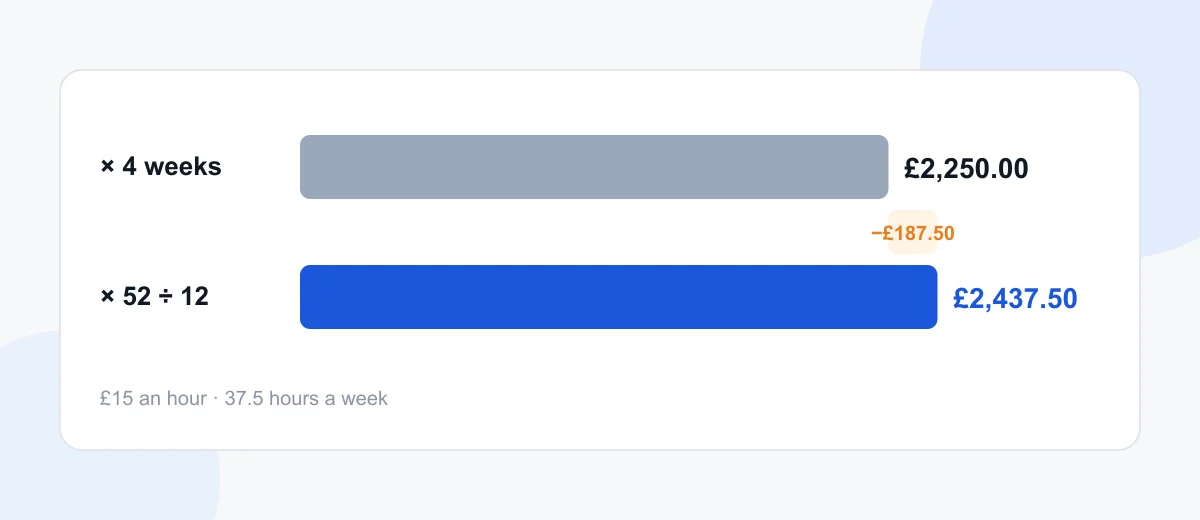
It is tempting to multiply weekly pay by four. But a year has 52 weeks, and 52 ÷ 12 is about 4.33 weeks a month. Using four weeks would put the worker above at £2,250 a month, which understates their pay by £187.50 a month, or £2,250 over a year.
Overtime
UK law does not require employers to pay extra for overtime. Whether you get time and a half, double time or your normal rate depends on your contract. The legal floor is that your average pay across all the hours you work must not fall below the National Minimum Wage.
If your contract pays time and a half at £14 an hour, and you work 5 hours on top of 37.5 in a week:
- 37.5 hours × £14 = £525
- 5 overtime hours × £21 = £105
- Weekly total: £630
If overtime varies from week to week, base your monthly budget on your contracted hours and treat overtime as a bonus when it comes.
How pay frequency changes each payday
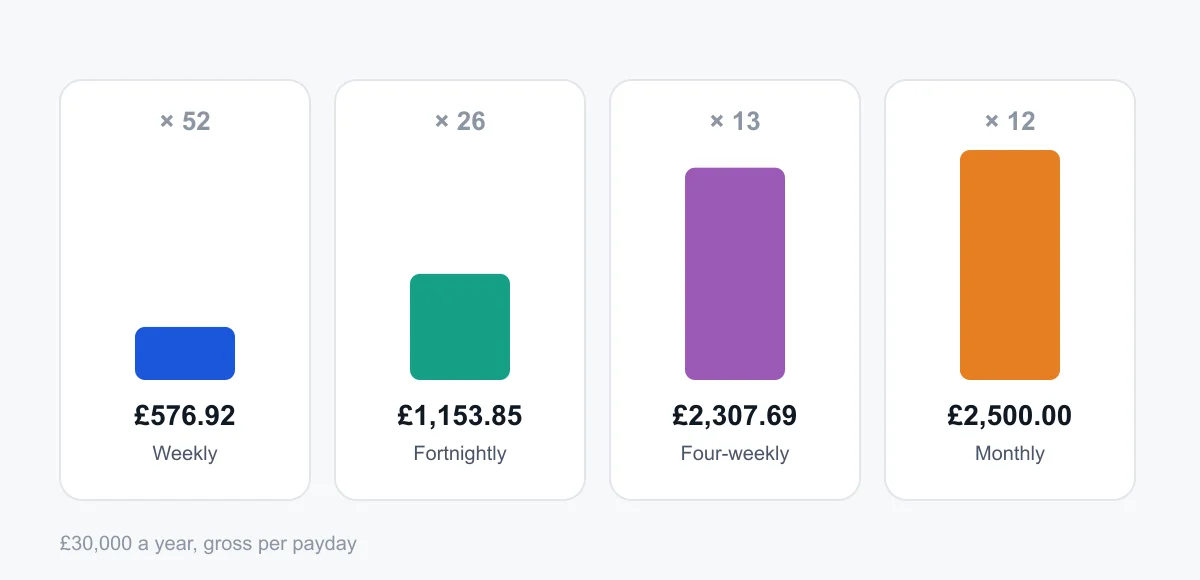
Your annual salary stays the same whatever the pay schedule, but the size of each payment does not. Here is a £30,000 salary on each common UK schedule:
| Pay frequency | Paydays a year | Gross per payday |
|---|---|---|
| Weekly | 52 | £576.92 |
| Fortnightly | 26 | £1,153.85 |
| Four-weekly | 13 | £2,307.69 |
| Monthly | 12 | £2,500.00 |
Four-weekly is not the same as monthly
Four-weekly pay sounds close to monthly, but it gives 13 paydays a year rather than 12. Each payment is smaller than a monthly one, and one calendar month every year contains two paydays.
If your rent, mortgage or direct debits are monthly, budget on one four-weekly payment a month and treat the extra payday as a buffer or savings. Fortnightly pay works the same way: most months have two paydays, but two months a year have three.
Working backwards: monthly to annual
To compare a monthly figure with an annual one, multiply by 12. To find the hourly equivalent of a salaried job, divide the annual salary by your contracted hours over a year. On a 37.5-hour week that is 37.5 × 52 = 1,950 hours:
- £2,500 a month × 12 = £30,000 a year
- £30,000 ÷ 1,950 = £15.38 an hour
If you regularly work unpaid hours beyond your contract, your real hourly rate is lower than this.
The National Living Wage as a monthly figure
From April 2026, the National Living Wage for workers aged 21 and over is £12.71 an hour. On a 37.5-hour week that comes to:
- £12.71 × 37.5 × 52 = £24,784.50 a year
- £24,784.50 ÷ 12 = £2,065.38 a month
Lower rates apply to younger workers: £10.85 an hour at 18 to 20, and £8.00 for under-18s and apprentices. The rates change every April, so check GOV.UK for the current figures.
Holiday is already included
Most full-time workers on a five-day week are entitled to at least 28 days' paid holiday a year, and employers can count bank holidays as part of that. If you are salaried, your monthly pay already covers your paid holiday, so you do not need to adjust the figures above for time off.
Quick reference
- Annual to monthly: divide by 12.
- Hourly to monthly: hourly rate × weekly hours × 52 ÷ 12.
- Monthly to annual: multiply by 12.
- Annual to hourly (37.5-hour week): divide by 1,950.
- Per payday: divide annual pay by 52, 26, 13 or 12 depending on your schedule.
Once you know your gross monthly pay, the next step is finding out how much of it you keep. Our guide to where your pay goes between gross and net breaks down every deduction on a UK payslip.
Sources
- GOV.UK: National Minimum Wage and National Living Wage rates · checked
- GOV.UK: Overtime, your rights · checked
- GOV.UK: Holiday entitlement · checked
About Harry Thompson
UK Tax Accountant
Harry Thompson is a UK tax professional with experience in accounting, taxation and financial reporting. He writes the Monthly Salary Calculator UK and its salary guides.
More about Harry Thompson